Everything to Know About Compression
A comprehensive guide for mixing engineers • Updated May 2026
Introduction: The Foundation of Modern Mixing
Compression is one of the most powerful and misunderstood tools in audio production. At its core, a compressor reduces the dynamic range of audio signals by automatically lowering the volume of louder parts while leaving quieter parts relatively untouched. This seemingly simple function has shaped the sound of recorded music for over seven decades, from the warm glue of vintage hardware to the surgical precision of modern digital processors.
Whether you're tracking a band in Logic Pro, mixing vocals that jump between whisper and scream, or adding punch to drums, understanding compression is essential. This guide will take you from fundamental concepts to practical applications, exploring both the technical parameters and the artistic choices that separate amateur mixes from professional productions.
The Essential Parameters: Understanding Your Controls
Threshold
The threshold is the level at which compression begins. Any signal that exceeds this level will be compressed, while signals below it pass through unaffected. Think of it as a gatekeeper: set it too high, and nothing gets compressed; set it too low, and everything does.
In practice, threshold is typically measured in dBFS (decibels relative to full scale) on digital systems or dBu on analog gear. A threshold of -10 dB means compression starts when the signal reaches -10 dB. The key is finding the sweet spot where only the parts that need control are being compressed. For vocals, you might set the threshold so that only the loudest words trigger compression, while for drum bus compression, you might compress almost the entire signal for cohesive glue.
Ratio
The ratio determines how much compression is applied once the signal crosses the threshold. A ratio of 4:1 means that for every 4 dB the input signal exceeds the threshold, the output only increases by 1 dB. The remaining 3 dB of level increase is reduced.
Common ratio ranges and their typical uses:
- 1.5:1 to 3:1 – Gentle, transparent compression for vocals, acoustic instruments, and mix bus glue
- 4:1 to 6:1 – Medium compression for drums, bass, and controlling dynamic performances
- 8:1 to 12:1 – Heavy compression for aggressive drums, parallel compression, or creative effects
- 20:1 and above – Limiting territory, used for peak control and mastering
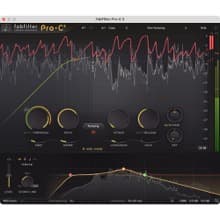
FabFilter Pro-C 3 offers flexible compression styles with visual gain reduction metering
Attack Time
Attack time controls how quickly the compressor responds once the signal exceeds the threshold. It's measured in milliseconds (ms) or microseconds (μs) and profoundly affects the character of compression.
Fast attack (0.1–10 ms): The compressor clamps down immediately, catching transients and peaks. This is useful for controlling sharp attacks but can make drums sound flat and lifeless if overused. Fast attack is great for taming overly aggressive vocals or limiting peaks on the master bus.
Medium attack (10–30 ms): A balanced setting that allows some transient through while still providing control. This is the sweet spot for many applications—snare drums, bass guitar, and general vocal work. It preserves the initial impact while controlling the sustain.
Slow attack (30–100+ ms): The compressor lets the transient pass through untouched, only compressing the sustain. This is the secret to punchy drums and aggressive parallel compression. Slow attack with a high ratio can add tremendous energy to drum overheads and room mics.
Release Time
Release determines how quickly the compressor stops compressing after the signal falls below the threshold. This parameter is critical for naturalness and groove.
Fast release (10–100 ms): The compressor recovers quickly, following the natural dynamics of the performance. This works well for busy, rhythmic material but can sound pumpy or breathy if too fast.
Medium release (100–300 ms): A middle ground that provides smooth control without obvious pumping. Great for vocals and most instruments.
Slow release (300 ms–2 seconds): The compressor holds on longer, creating sustained control. This works for slow ballads and mastering but can sound sluggish on fast material.
Auto release: Many modern compressors offer automatic release that adapts to the signal. This is often the best starting point, as it responds musically to varying tempos and rhythms.
Knee
The knee determines how gradually compression is applied as the signal approaches and crosses the threshold. It's often overlooked but has significant sonic impact.
Hard knee: Compression starts abruptly at the threshold. The effect is more obvious and audible—useful for deliberate control and effects. Classic FET compressors like the 1176 typically have a hard knee response.
Soft knee: Compression begins gradually before the threshold and increases smoothly as the signal gets louder. This sounds more transparent and natural. Optical compressors like the LA-2A naturally have soft knee behavior due to their light-dependent circuitry.
Many digital compressors let you adjust knee from 0 dB (hard) to 10+ dB (very soft). For invisible compression on vocals or acoustic instruments, use a soft knee. For intentional control on drums or bass, a harder knee often works better.
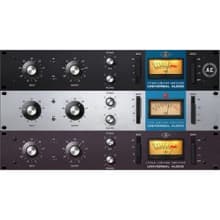
The UAD 1176 emulation captures the hard-knee, fast response of the classic FET compressor
Makeup Gain
Makeup gain compensates for the level reduction caused by compression. Since compression reduces peaks, the overall signal becomes quieter. Makeup gain brings it back up to the original level—or beyond.
The critical principle: always compare compressed and uncompressed signals at matched loudness. Louder always sounds better to our ears, so if you compress something and it sounds better, make sure you're not just responding to the volume increase. Many compressors offer auto-makeup gain that attempts to compensate automatically, but always verify by ear and with meters.
Dynamic Range
Dynamic range is the difference between the loudest and quietest parts of a signal or mix. Compression reduces dynamic range, which can make tracks sound more consistent and controlled—or squashed and lifeless if overdone.
In modern music production, dynamic range is measured in LU (Loudness Units) or dB. A typical modern pop mix might have a dynamic range of 5–8 LU, while a classical recording might preserve 15–20 LU or more. There's no right answer—dynamic range is an artistic choice that depends on genre, medium, and intent.
The loudness wars of the 2000s taught us that extreme dynamic range reduction sounds fatiguing and removes life from music. Today, streaming platforms normalize loudness, making extreme limiting less beneficial. Aim for controlled dynamics that serve the music rather than arbitrary loudness targets.
Transient Response and Compression
A transient is the initial attack of a sound—the snap of a snare, the pluck of a bass string, the consonant of a vocal. Transients contain crucial information about the character and impact of instruments.
Compression and transients have a complex relationship. Fast attack times reduce transient impact, making drums sound duller and less punchy. Slow attack times preserve or even enhance transients by compressing only the sustain, creating apparent increase in punch.
For drums, transient preservation is usually desirable. Use slow to medium attack times and let the initial impact through. For vocals with harsh sibilants or for controlling pick noise on guitars, faster attacks can help smooth out unwanted transient energy. Some engineers use dedicated transient shapers in addition to compression for even more control over attack and sustain independently.
Types of Compression: Hardware Emulation vs. Net New Digital
Hardware Emulation: The Classics
Classic hardware compressors aren't just tools—they're instruments with distinct personalities shaped by their electronic topologies. Plugin emulations attempt to capture these characteristics through modeling or sampling.
FET (Field Effect Transistor) Compression
The iconic 1176 is the most famous FET compressor. It's known for lightning-fast attack (under 1 ms), aggressive character, and colorful harmonics. The 1176 has fixed attack/release curves with only seven discrete settings, and its famous "all buttons in" mode combines multiple ratios for extreme parallel compression effects.
Best on: Drums (especially snare and room mics), aggressive vocals, bass guitar, and anything that needs punch and attitude.
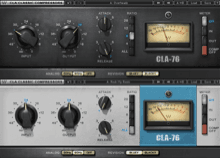
Waves CLA-76 brings the aggressive character of the 1176 FET compressor to your DAW
Optical (Opto) Compression
The LA-2A and LA-3A use light and photoresistors to control gain reduction. This creates natural, program-dependent compression with inherently soft knee and smooth, musical response. Optical compressors are slow by nature—attack times are typically 10 ms or slower—which preserves transients beautifully.
Best on: Vocals (the LA-2A is virtually synonymous with vocal compression), bass guitar, acoustic instruments, and anything that needs transparent, musical leveling without aggression.
VCA (Voltage Controlled Amplifier) Compression
VCA compressors like the SSL Bus Compressor, API 2500, anddbx 160 offer precise, punchy control with fast attack capabilities. VCA designs are clean, predictable, and transparent at low ratios but can add character when pushed.
The SSL Bus Compressor became legendary for its ability to "glue" mixes together without obvious compression artifacts. Its slow attack mode lets transients through while controlling the body of the mix, and its auto-release responds musically to varying material.
Best on: Mix bus, drum bus, instrument groups, and anywhere you need precise control with minimal coloration.
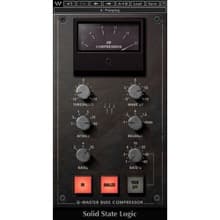
The SSL Bus Compressor is the secret weapon for mix glue on countless professional records
Variable-Mu (Tube) Compression
Tube compressors like the Fairchild 670 and Manley Variable Mu use vacuum tubes for gain control. They're known for warm, smooth compression with natural soft knee response and rich harmonic saturation. Variable-mu compression is gentle and musical, often requiring significant gain reduction before sounding "compressed."
Best on: Mix bus, mastering, vocal bus, and anywhere you want vintage warmth and expensive-sounding glue.
PWM and Modern Hybrids
The Empirical Labs Distressor is a modern classic that combines multiple compression topologies—VCA and opto characteristics—with digital control. It can sound clean and precise or colored and aggressive depending on settings. Its versatility made it a studio standard.
Net New Digital Compressors
Modern digital compressors aren't constrained by analog circuits. They can offer capabilities impossible in hardware: transparent compression without noise or distortion, multiband processing, dynamic sidechain EQ, look-ahead limiting, and multiple compression styles in one plugin.
FabFilter Pro-C 2
Pro-C 2 offers eight compression styles ranging from clean to colored, with extensive metering, sidechain options, and optional "vocal" preset categories. Its visual feedback makes learning compression intuitive.
Best on: Anything. Its versatility makes it a workhorse compressor for modern productions.
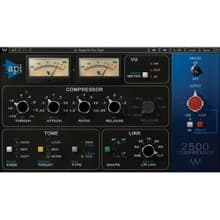
The API 2500 brings punchy VCA compression with API's signature tone to mix and drum buses
Multiband Compression
Multiband compressors like FabFilter Pro-MB split the frequency spectrum into bands, compressing each independently. This allows surgical control—tightening bass without affecting vocals, or de-essing without touching the entire signal.
Multiband compression is powerful but dangerous. It can easily create unnatural phase issues and spectral imbalances. Use it when standard compression can't solve the problem, typically on mix bus issues, masters, or problem-specific frequency ranges.
Dynamic EQ vs. Multiband Compression
Modern dynamic EQs like Pro-Q 3's dynamic bands offer multiband-style control with more transparent results. They compress specific frequency ranges only when they exceed threshold, leaving the rest of the spectrum untouched. For most surgical tasks—sibilance control, bass tightening, frequency-specific limiting—dynamic EQ is now the preferred approach.
Compression Settings by Instrument
Vocals
Vocals benefit from serial compression: multiple stages of gentle compression rather than one stage of heavy squashing.
- First stage (transparent leveling): Optical compressor or clean digital (2-4:1 ratio, medium attack, medium release, 3-5 dB GR) to even out performance inconsistencies
- Second stage (character and presence): FET or colored compressor (3-6:1 ratio, faster attack if needed, 2-4 dB GR) to add density and excitement
- De-essing: Multiband or dedicated de-esser targeting 5-8 kHz as needed
Always use your ears and the song as guides. A whispered indie vocal might need minimal compression, while a belt-y pop vocal might require aggressive control.
Bass Guitar
Bass needs both note-to-note consistency and transient control.
- DI leveling: Optical or VCA compressor (3-6:1 ratio, medium attack to preserve the pluck, medium-fast release, 3-6 dB GR)
- Parallel compression: Heavily compressed (8:1 or higher, fast attack, fast release) blended underneath the natural bass for added sustain and aggression
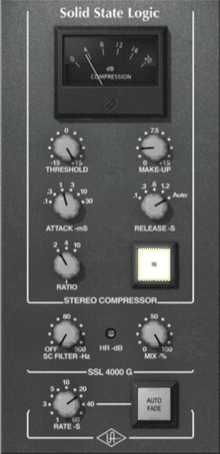
SSL console channel strips include legendary VCA compression for punchy, controlled tracks
Kick Drum
Compression on kick is about controlling the body while preserving or enhancing the attack.
- Punch compression: 3-6:1 ratio, slow attack (10-30 ms) to let the beater through, release timed to the groove (often auto works great), 2-6 dB GR
- Fast attack only if: The transient is too pokey or you're using parallel compression for effect
Snare Drum
Snare benefits from transient-preserving compression to maintain crack and body.
- Standard settings: 3-6:1 ratio, 10-30 ms attack, 50-150 ms release, 3-6 dB GR
- Parallel option: Heavy compression (10:1+, fast attack, fast release) blended for aggressive crack and sustain
Drum Overheads and Room Mics
Compression here is optional. When used, the goal is cohesion without pumping.
- Gentle settings: 2-4:1 ratio, slow attack (20-40 ms) to preserve cymbal transients, auto or medium release, 2-4 dB GR
- NY-style parallel compression: Heavily compressed room sound blended under the natural drums for depth and aggression
Drum Bus
Bus compression glues individual drum tracks together into a cohesive kit.
- Classic approach: SSL-style VCA compressor, 4:1 ratio, slow attack mode, auto release, 2-4 dB GR
- Alternative: API 2500 or other VCA with punch and tone
Saturation plugins like FabFilter Saturn add harmonic richness that complements compression
Electric Guitar
Electric guitars are often already heavily compressed by amp distortion. Additional compression is typically subtle or used for specific problems.
- Light leveling: 2-4:1 ratio, medium attack, auto release, 2-3 dB GR
- Use compression mainly when: Clean or slightly driven tones need consistency, or you're controlling strumming dynamics
Mix Bus
Mix bus compression is the secret sauce that turns separate tracks into a cohesive production. Use it sparingly—you're gluing, not squashing.
- SSL-style VCA: 2-4:1 ratio, slow attack (30 ms), auto release, 1-3 dB GR maximum
- Variable-mu: 1.5-2:1 ratio, slower response, 1-2 dB GR for vintage glue and warmth
Many engineers mix into the bus compressor from the start, so the individual tracks are balanced against the compression. Others add it at the end. Experiment to find what works for your workflow.
Expert Perspectives: What the Pros Say
Butch Vig on Compression and Movement
Producer and engineer Butch Vig (Nirvana, Garbage, Foo Fighters) is known for powerful, punchy productions that maintain dynamic excitement despite heavy processing.
"People think you need to compress everything, but that's not true. The best mixes breathe. I'll often compress drums and bass heavily to create a solid foundation, then leave guitars and vocals more dynamic so they can sit on top and move with the performance. The contrast between heavily controlled elements and dynamic elements creates impact."
Vig is also famous for his use of parallel compression, particularly on drums. He pioneered techniques like crushing room mics with extreme compression and blending them back for massive, explosive drum sounds without losing transient impact on the close mics.
Andrew Scheps on Natural Dynamics
Mix engineer Andrew Scheps (Red Hot Chili Peppers, Adele, Metallica) advocates for minimal compression and preserving natural dynamics whenever possible.
"I use way less compression than people think. Often I'll set up a compressor and then turn the threshold up until it's barely doing anything. If the performance is good and the arrangement works, you don't need to compress it to death. Compression should be surgical—solve a specific problem or add a specific character, then move on."
Chris Lord-Alge on Character and Aggression
Mixer Chris Lord-Alge (Green Day, Muse, Foo Fighters) is known for aggressive, in-your-face mixes built on extensive compression and limiting.
"I'm not afraid to hit things hard. On a CLA vocal, I might have three or four compressors in series—1176 for color and excitement, LA-2A for smoothness, then a limiter catching peaks. Each stage is doing 3-5 dB of gain reduction. It's not subtle, but that's the sound. Rock and pop vocals need to be in your face."
Saturation tools like Decapitator are often paired with compression for added tone and character
Bob Clearmountain on Bus Compression
Legendary mixer Bob Clearmountain (Bruce Springsteen, The Rolling Stones, Bryan Adams) helped popularize mix bus compression in the analog era.
"I learned to mix into an SSL bus compressor early on. The way it glues everything together and creates movement—that subtle pumping on the backbeat—became part of my sound. But it's only 2-3 dB of compression. Any more and you're fighting it the whole mix."
Sylvia Massy on Breaking the Rules
Producer Sylvia Massy (Tool, System of a Down, Red Hot Chili Peppers) is known for creative, unconventional techniques including extreme and unusual compression approaches.
"The best compression is often the weirdest. I'll run vocals through guitar pedal compressors, hit drums with broadcast limiters, or compress something so hard it becomes an effect rather than transparent dynamics control. Don't be a slave to 'proper' settings. If it sounds good, it is good."
Consensus and Controversy
While these engineers have different approaches, common threads emerge:
- Serve the song: Compression should support the musical intent, not follow arbitrary rules
- Contrast creates impact: Some elements should be controlled, others dynamic
- Character matters: The type of compressor is as important as the settings
- Less is often more: Even aggressive-sounding mixes often use less compression than beginners assume
Advanced Techniques
Parallel Compression (New York Compression)
Parallel compression involves heavily compressing a copy of the signal and blending it under the original. This adds sustain, density, and aggression while preserving the transient impact and naturalness of the uncompressed track.
The classic "New York" approach: send drums to a bus, compress aggressively (10:1+ ratio, fast attack and release, 10+ dB GR), and blend to taste. The result is massive, dense drums that still punch.
Sidechain Compression
Sidechain compression uses an external signal to trigger compression. The most common use: ducking bass or pads when the kick hits, creating rhythmic pumping and ensuring the kick cuts through.
Modern uses extend beyond dance music—sidechain compression can make vocals more intelligible by ducking competing elements, or create space in dense arrangements by having lead elements control background layers.

Modern limiters offer transparent peak control for mastering and mix bus applications
Serial Compression
Using multiple compressors in series, each doing a moderate amount of work, often sounds more natural than one compressor working hard. A typical vocal chain might be: optical compressor (leveling) → FET compressor (character) → limiter (peak control). Each stage does 3-4 dB GR, totaling 9-12 dB, but the cumulative effect sounds smoother than a single compressor doing all that work.
Upward Compression
Traditional compression reduces loud signals. Upward compression does the opposite—it raises quiet signals, reducing dynamic range from below rather than above. This can create dense, forward mixes without the squashed sound of heavy downward compression. Modern plugins like Waves MV2 and expanders in reverse mode offer upward compression capabilities.
Common Mistakes and How to Avoid Them
Mistake 1: Compressing Without Reason
Not every track needs compression. If the performance is consistent and sits well in the mix, leave it alone. Compression should solve a specific problem or add a specific character—not be applied by default.
Mistake 2: Comparing at Unmatched Levels
Compression usually makes things louder (after makeup gain). Always compare compressed and uncompressed signals at matched volume. If it doesn't sound better at the same loudness, you don't need it.
Mistake 3: Over-Compressing the Mix Bus
Mix bus compression should be subtle. If you're seeing more than 3-4 dB of gain reduction, you're probably compressing too hard. The mix bus is gluing, not leveling individual performances.
Mistake 4: Ignoring Attack and Release
Beginners focus on threshold and ratio but ignore timing. Attack and release shape the character of compression more than any other parameters. Spend time experimenting with these settings.
Mistake 5: Using the Wrong Type of Compressor
An 1176 and an LA-2A at the same settings will sound completely different. Choose the compressor type first based on the tone you want, then dial in settings.
Conclusion: Compression as an Artistic Choice
Compression is both a technical tool and an artistic statement. The "right" amount of compression depends on genre, taste, arrangement, and intent. Modern hip-hop might use extreme limiting and compression for competitive loudness and dense texture. Acoustic jazz might use minimal compression to preserve dynamic expression.
The key is understanding what compression does—both technically and sonically—so you can make intentional choices. Learn the parameters. Experiment with different compressor types. Train your ears to hear gain reduction and recognize pumping, squashing, and glue. Most importantly, always ask: does this compression serve the song?
Compression shaped modern recorded music. From the warm glue of Motown's tube limiters to the aggressive punch of '90s rock, from the dense perfection of modern pop to the dynamic swagger of hip-hop, compression is the invisible force binding performances together. Master it, and you master one of the most powerful tools in audio production.
Recommended Plugins
Here are some of the most trusted compression plugins used by professional engineers:
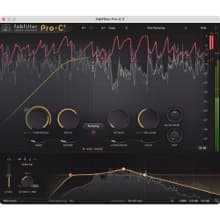
FabFilter Pro-C 3
Versatile digital compressor with multiple styles
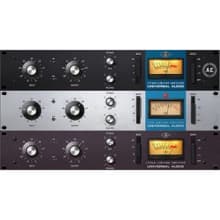
UAD 1176
Classic FET compression for aggression and punch
Waves CLA-76
Chris Lord-Alge's signature 1176 sound
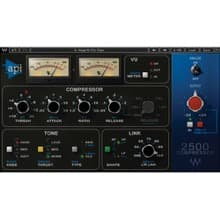
Waves API 2500
Legendary bus compression with API tone
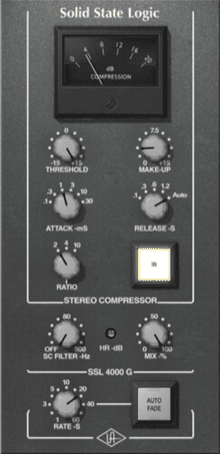
UAD SSL 4000 G
Console compression for mix glue
Waves SSL G-Master
Mix bus compression standard